
You may already know the benefits of GLP-1 treatments but do you know why nutrition is especially important for those on GLP-1s? It is absolutely critical to eat the right proportions of macros and micros while taking these meds because of the greater potential to underconsume key nutrients and the side effects, as well as long term health outcomes.
What Are GLP-1 Medications?
GLP-1s are one of the most popular treatments for type 2 diabetics and those who are looking to lose weight. The common prescriptions, including Ozempic, Wegovy, Mounjaro, and Zepbound, have helped many people lose weight and improve their blood sugar levels (The New England Journal of Medicine).

GLP-1 is a hormone known as glucagon-like peptide 1 that is created and released in the gut. It helps regulate the body’s blood sugar levels, appetite, and digestion. It also helps with slowing down the process of the food leaving the stomach and thus increasing satiety, or the feeling of fullness. When talking about GLP-1 in terms of medications, we’re referring to glucagon-like peptide-1 receptor agonists (GLP-1 RA). This is a synthetic receptor agonist that imitates GLP-1.
Some of the medications contain only the synthetic GLP-1receptor agonist - (liraglutide and semaglutide) while others, like tirzepatide, imitate both GLP-1 and glucose-dependent insulinotropic polypeptide (GIP) hormones. Some studies have shown that the tirzepatide drug is more effective in weight loss management (PubMed Central).
The GLP-1 drugs are listed below are approved by the FDA for diabetes and weight management:
Medications for Type 2 Diabetes
Ozempic (semaglutide)
Rybelsus (oral semaglutide)
Mounjaro (tirzepatide)
Victoza (liraglutide)
Medications for weight loss
Wegovy (semaglutide)
Zepbound (tirzepatide)
Saxenda (liraglutide)
How Are GLP-1 Medications Taken?
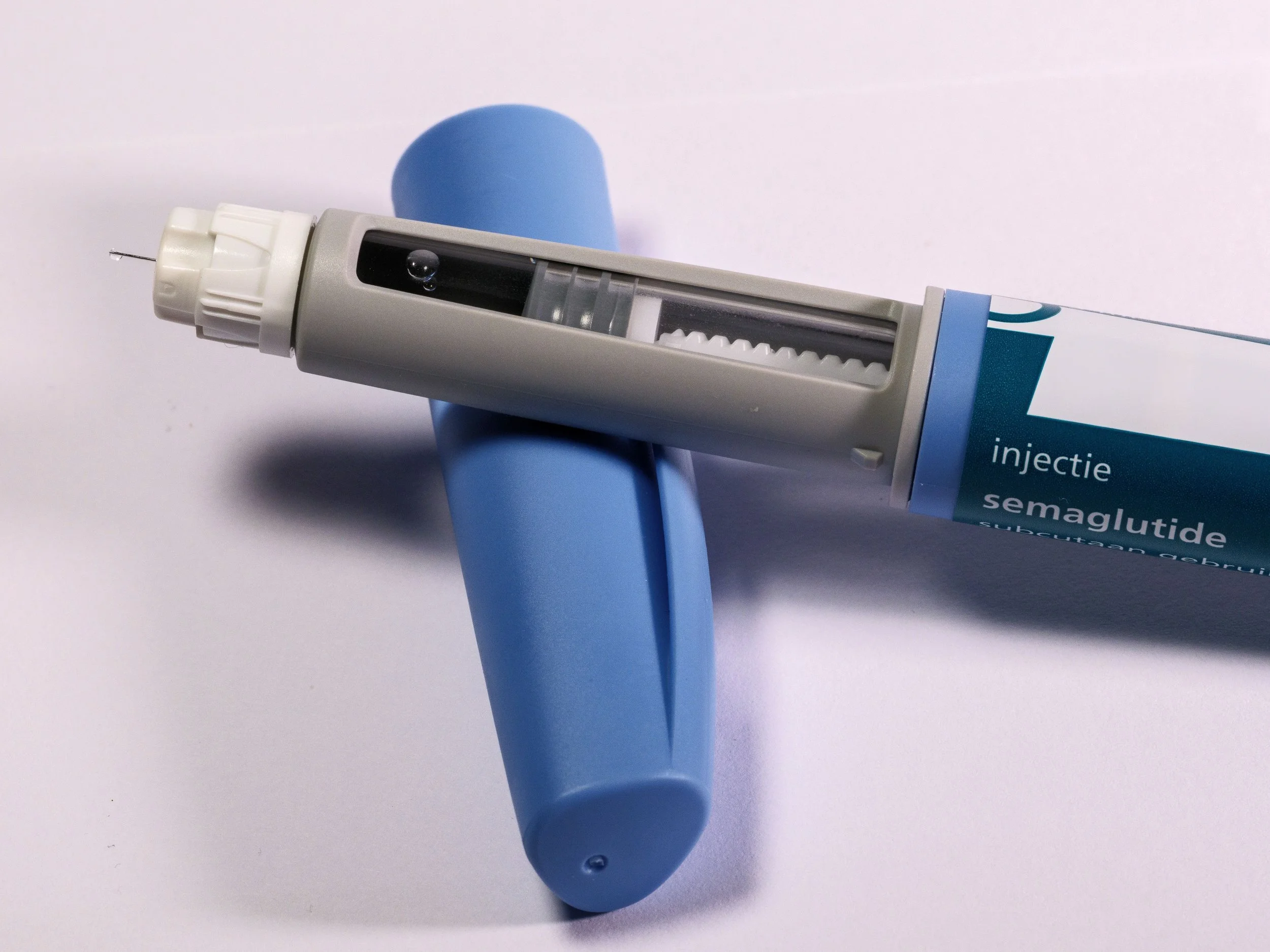
The medications can be taken either via injection or orally. Both can be taken either once a day or once a week, depending on the prescription given by the healthcare provider. The injection treatments are given in the areas of the abdomen, thigh, or upper arm. The drugs for daily injections include Victoza and Saxenda. The ones for weekly injections are Ozempic, Wegovy, Mounjaro, and Zepbound. The oral tablets include Rybelsus and Wegovy, which are taken once daily.
Nutrition Challenges While Taking GLP-1 Medications

While there may be benefits to taking a GLP-1, there are also potential gastrointestinal (GI) related side effects that some people may experience. These side effects can include nausea, vomiting, diarrhea, constipation, bloating, and other GI symptoms. According to The New England Journal of Medicine, the most common side effects of semaglutide are nausea and diarrhea. Fiber and fluids are particularly important in order to prevent some of the GI side effects. Gradually increasing soluble and insoluble fiber can also help alleviate some of the GI symptoms (The American Journal of Clinical Nutrition).
GLP-1s typically help reduce appetite, which naturally leads to a lesser amount of nutrient intake. This carries the risk of inadequate intakes of protein, fiber, vitamins, minerals, and fluids. Inadequate protein intake can result in loss of lean muscle mass, especially in the presence of significant weight loss (Science Direct).
Along with reduced appetite and caloric intake, there is also concern for essential vitamin and mineral deficiencies. The most deficiencies tend to be vitamins A, D, E, K, B1, and B12. Mineral deficiencies can include iron, calcium, magnesium, and zinc (The American Journal of Clinical Nutrition).
Why Nutrition Support Matters
The goal of nutrition education for patients using GLP-1s is to maximize the benefits and increase the effectiveness of GLP-1 while preventing macronutrient and micronutrient deficiencies. Patients should consume nutrient dense foods such as fruits, vegetables, whole grains, dairy, lean proteins, nuts, and seeds (The American Journal of Clinical Nutrition).
Another priority is to preserve both bone and muscle mass, by making sure enough protein and key minerals are consumed throughout the day. Following these nutritional guidelines is beneficial for both long term health and weight management.
Dietitians Are Uniquely Positioned to Optimize Health for Patients Using GLP-1s
Working with a registered dietitian can help meet these nutritional goals by supporting and managing GI side effects and planning out meal patterns based on the individual’s food preferences and dietary needs through nutrition therapy (The American Journal of Clinical Nutrition).
Dietitians are uniquely trained to assess patients and identify gaps in their consumption and are able to come up with creative solutions to ensure goals are met, while maintaining optimal intake of key nutrients for health. They can also address side effects with appropriate strategies and techniques to help minimize some of the potential issues patients deal with on GLP-1s.
They are also able to create highly tailored and individualized plans, taking into account life stages, other medical conditions that affect nutrition recommendations, lifestyles, physical activity, food choices, cultural differences, and more.